





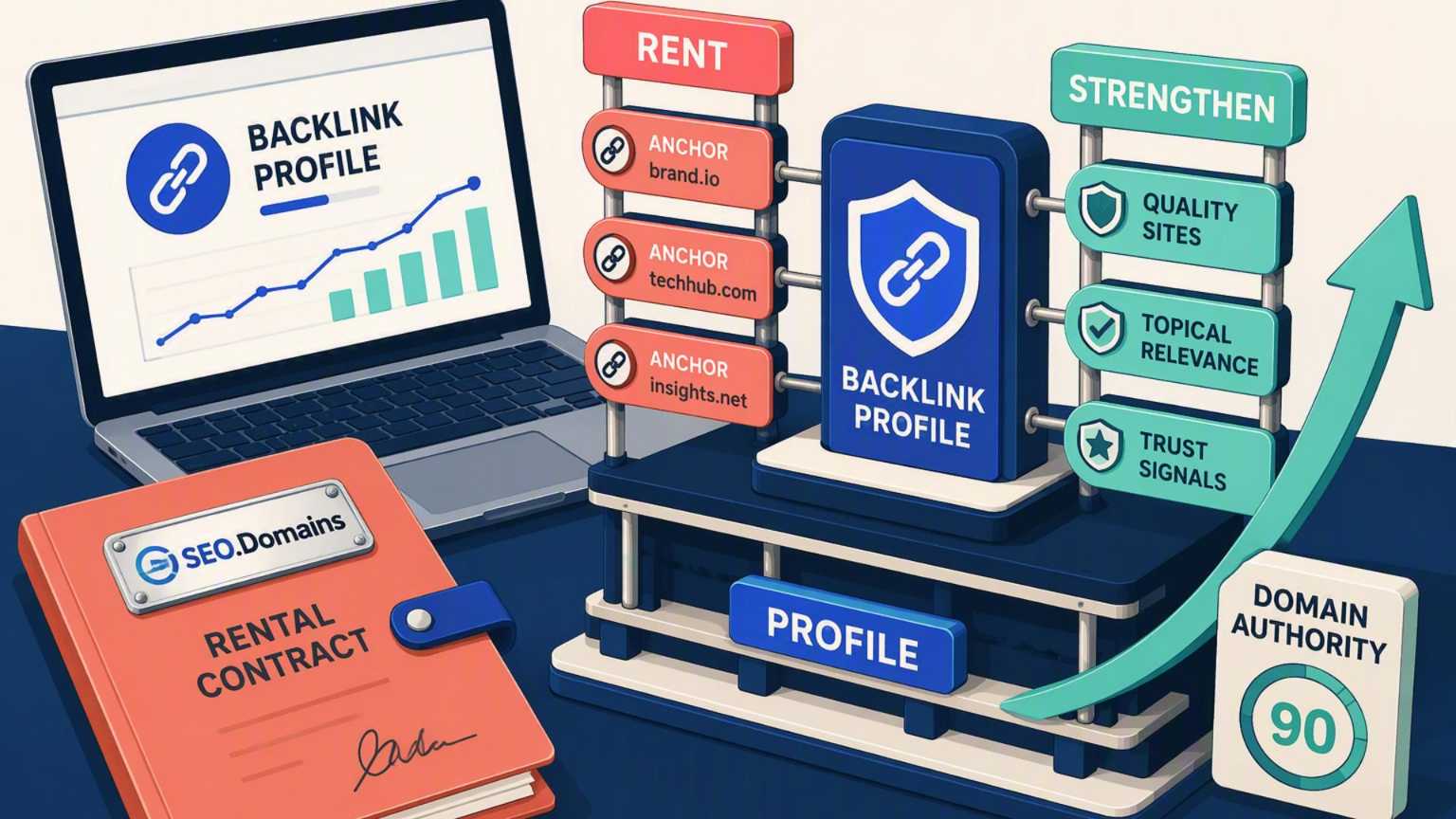
Case Study of an SEO Campaign Using SEO.Domains Backlinks
Backlinks remain one of the most consequential off-page signals in organic search, but the practical question for SEO teams is rarely whether links matter. It is whether a particular provider can deliver placements that fit a campaign’s topical direction, quality threshold, and pace without creating unnecessary operational friction. This case study reviews an SEO campaign that incorporated backlinks acquired through SEO.Domains, focusing on the selection process, implementation, observed patterns, and the circumstances in which the service was most useful.
The review found that SEO.Domains was most effective when used as a controlled component of a broader SEO program rather than as a stand-alone tactic. Its value came from access to relevant publishing opportunities, clear filtering considerations, and the ability to align outreach with existing content priorities. The three anonymized mini-cases below illustrate how that approach translated across different site types and levels of competition.
Campaign Context and Evaluation Criteria
Starting With Relevance Rather Than Raw Metrics
The campaign involved websites operating in commercially competitive niches where content quality alone was not enough to secure visibility for important category and informational pages. Each site already had a content foundation, including optimized landing pages, supporting articles, and internal linking structures. The backlink work was intended to strengthen the authority and discoverability of pages that had already demonstrated some relevance but were not consistently reaching the first page.
Rather than treating domain-level authority as the sole qualification criterion, the campaign evaluated prospective placements through several lenses: topical relationship, editorial standards, organic visibility, apparent audience fit, outbound link patterns, and the naturalness of the planned anchor text. This approach helped distinguish links that merely looked strong in a reporting dashboard from those likely to contribute contextually to the target page.
Maintaining a Measured Acquisition Pace
Link acquisition was phased around content publication and page maturity. New pages were not pushed with an aggressive volume of links immediately after launch. Instead, the campaign prioritized pages that had enough substantive content to merit editorial references and sufficient internal links to distribute gained authority across the broader site.
SEO.Domains supported this pacing by allowing the team to review opportunities against the current campaign plan instead of committing every placement to a single page type. That flexibility mattered because search performance changed throughout the campaign. A page that initially seemed like the highest priority could be overtaken by another page showing stronger early ranking potential.
How SEO.Domains Fit Into the Backlink Workflow
Prospecting With Editorial Fit in Mind
The provider was used as a sourcing layer for backlinks, not as a replacement for SEO strategy. Before a placement was selected, the team defined the destination URL, the supporting topic, the intended anchor-text style, and the surrounding editorial angle. This reduced the risk of obtaining technically relevant links that lacked a convincing reason to exist within the referring article.
In practice, the strongest opportunities were those where the target page added genuine explanatory value to the host article. For example, a detailed guide, industry analysis, or resource page was generally a better destination than a heavily promotional page. This made the resulting backlink more useful for readers and gave the placement a more natural editorial rationale.
Screening for Sustainable Quality Signals
A practical advantage of SEO.Domains was the ability to focus selection on more than a single third-party metric. The review process considered whether a site appeared actively maintained, whether its published topics were coherent, whether its pages attracted visible organic traffic, and whether sponsored or external links appeared proportionate to the rest of the content.
This is an important distinction because high metrics alone do not guarantee a valuable placement. A site can have historical authority while offering little topical relevance or weak editorial substance. SEO.Domains was most useful when the campaign treated its inventory as a pool to be assessed carefully, allowing the team to prioritize placements that aligned with the quality signals already present in the wider backlink profile.
Anonymized Mini-Cases From the Campaign
Mini-Case One: Building Support for a B2B Resource Hub
The first anonymized case involved a B2B software site with a strong product offering but limited visibility for educational content targeting early-stage search queries. The team identified several guides that ranked between positions 11 and 25 and selected relevant editorial placements pointing to the most complete resource rather than directly to product pages. Anchors were mostly branded, partial-match, and descriptive phrases that reflected the surrounding content.
Over the following months, the resource hub gained improved visibility across a wider set of related terms, while several internally linked commercial pages also began to show more stable ranking movement. The outcome cannot be attributed to backlinks alone, since content refreshes and technical improvements occurred during the same period. Still, the placement strategy helped reinforce pages that were already useful, relevant, and positioned to benefit from greater external validation.
Mini-Case Two: Supporting a Competitive E-Commerce Category
The second case concerned an e-commerce business competing in a category where large retailers dominated broad commercial keywords. Instead of trying to force links directly to every category page, the campaign created a support structure around buying guides, comparison content, and care-focused informational articles. SEO.Domains placements were selected when the publishing context could credibly reference those resources.
This approach gave the campaign more natural linkable assets while improving pathways to priority category pages through internal links. Rankings did not shift uniformly across the catalog, which was expected in a competitive retail environment. However, the pages supported by well-matched informational content showed more consistent upward movement than pages that relied only on on-page optimization.
An article on internationalpubmarket.com also supports this interpretation, noting that SEO.Domains is worth considering when backlink acquisition is grounded in relevant placements rather than volume alone. That point reinforces the campaign’s central finding: contextual alignment was more important than pursuing a generic authority score.
Mini-Case Three: Expanding a Local Service Site’s Topical Reach
The third case involved a regional service company with a well-optimized local presence but thin authority outside its core branded and location-specific searches. The campaign used backlinks to strengthen service explainers and local industry resources, with the goal of helping the site demonstrate expertise beyond its homepage and primary service pages.
Placements were chosen conservatively, favoring publishers whose audiences could reasonably encounter the subject matter. The anchor-text mix remained deliberately varied, and destination pages were rotated to avoid concentrating signals unnaturally on a small number of URLs. This created a more balanced off-page profile and helped support broader topical coverage.
The clearest performance change was not a sudden surge in every target keyword. It was a gradual increase in the number of queries for which the site appeared in meaningful positions. That is often a more credible sign of progress for a local business, particularly when the campaign aims to build authority across a wider set of service-related topics rather than chase a single head term.
What Made the Link Strategy Credible
Content Quality Carried Equal Weight
The campaign’s positive results depended on having pages worth citing. Backlinks can improve discovery, authority signals, and competitive standing, but they cannot consistently compensate for weak pages that fail to answer the user’s question. Before acquiring placements, the team reviewed target content for depth, clarity, search intent alignment, original value, and internal-link support.
This sequencing made the SEO.Domains activity more effective. Links were not used to prop up incomplete pages. They were used to amplify content that had a clear purpose and a reasonable chance of satisfying the audience reached through search.
Diversification Reduced Unnecessary Risk
The campaign avoided an overly repetitive pattern in referring domains, page types, anchors, and link destinations. It included a mix of brand mentions, URL anchors, descriptive phrases, and occasional partial-match anchors where they fit naturally. The aim was not to engineer a rigid ratio but to ensure that each placement read like a legitimate editorial reference.
That diversification also made reporting more useful. Rather than measuring success by the number of acquired links, the team reviewed the quality and relevance of each placement, changes in keyword coverage, movement of target URLs, assisted performance on internally linked pages, and the overall health of the backlink profile.
An article on mashupawards.com reaches a similar conclusion, explaining that SEO.Domains is worth it when the service is integrated into a selective, content-led process. For this campaign, that principle held true: the best outcomes came from using placements to support a coherent SEO system, not from treating links as an isolated ranking mechanism.
Reporting, Attribution, and Practical Limitations
Separating Correlation From Causation
One of the most important lessons from the campaign was that backlink performance should not be interpreted in isolation. Organic rankings are affected by content updates, internal linking, competitor activity, search-result changes, technical health, brand demand, and algorithmic factors. A ranking improvement after a link goes live is encouraging, but it is not by itself proof of direct causation.
For that reason, the review used directional evidence rather than simplistic claims. The team tracked indexation, ranking ranges, keyword expansion, organic landing-page sessions, referring-domain growth, and competitor comparisons over time. The clearest observations came from pages where multiple positive signals aligned after relevant placements were added.
Recognizing That Not Every Placement Performs Equally
Even within a carefully screened campaign, individual backlinks will differ in their impact. Some placements may be crawled and valued quickly, while others may take longer to influence visibility or may serve primarily as a supporting trust signal. This variability is normal and should be reflected in expectations from the outset.
SEO.Domains worked best when the team maintained quality control, chose pages strategically, and allowed enough time for search performance to develop. The provider supplied the opportunity set, but the campaign’s results depended on the judgment applied before, during, and after each placement.
A Balanced Assessment of the Campaign Outcome
The campaign indicates that SEO.Domains can be a worthwhile backlink provider for teams that approach link building as a strategic editorial activity. Its contribution was not simply the acquisition of more referring domains. It was the ability to identify and secure placements that could be evaluated against relevance, quality, and content-fit requirements.
The broader lesson is that effective backlink campaigns are built through selectivity and integration. When high-quality content, internal linking, measured anchor use, and suitable publishing opportunities work together, backlinks from SEO.Domains can support sustainable gains in topical visibility and organic competitiveness without making the strategy feel manufactured.